
Lake Bogoria in Kenya – Kenya’s Lake Bogoria is one of the smaller lakes in the Rift Valley, but it has just as much beauty as the other lakes in the region.
Lake Bogoria is very important and has been declared a RAMSAR Wetland Site. It has also been a protected area under the Lake Bogoria National Reserve since the 1970s. The lake is shallow, about 10 meters deep, and measures around 34 kilometers long and 3.5 kilometers wide.
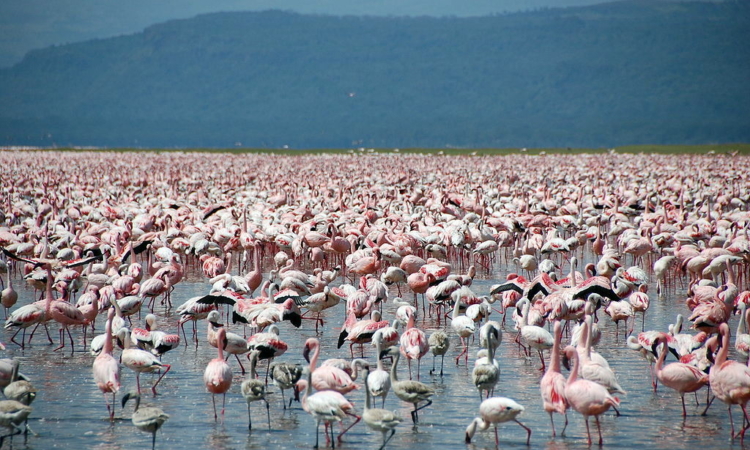
Lake Bogoria is a saltwater lake located south of Lake Baringo. It is known for having some of the best conditions for flamingos. Because the water is alkaline, blue-green algae grow well, and this algae is the main food for the flamingos.
At times, up to 2 million flamingos can be seen feeding in the lake. When this happens, the lake appears bright pink from a distance, looking like a field of flowers. This scene is one of a kind and only happens in Kenya’s Rift Valley lakes because of the special environment that supports the birds.
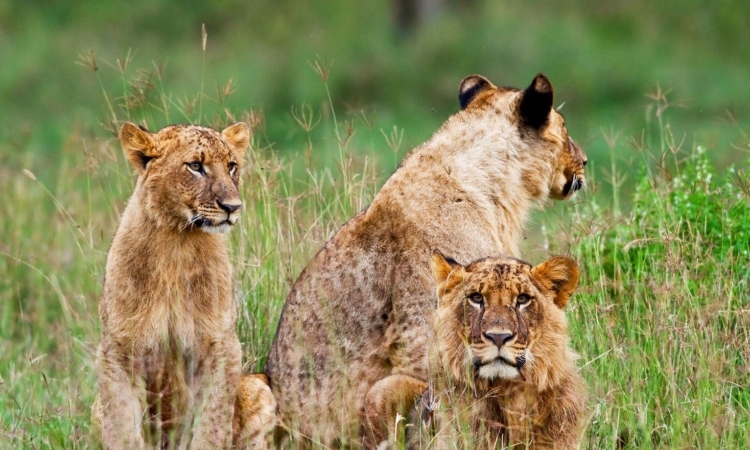
Besides flamingos, Lake Bogoria is also home to other animals such as buffaloes, zebras, baboons, warthogs, caracals, hyenas, impalas, and antelopes.
Hot Springs & Geysers
The area around Lake Bogoria is full of volcanic features. The ground here is made of volcanic rocks from the Miocene to Pleistocene period. There are around 200 hot springs around the lake, with water temperatures ranging from 39°C to 98.5°C. Most of these hot springs are near or inside the lake. The water contains a lot of carbon dioxide, which causes it to bubble or boil.
There are also many geysers in the area. These are natural vents that shoot hot water into the air. In the past, the activity of the geysers has changed due to the rise and fall of the lake’s water level. For example, between 2001 and 2005, many geysers were active, but some became inactive in 2006 due to lower water levels.
In the Loburu Delta on the western side of the lake, one geyser known as KL30 used to shoot water up to 5 meters high every 45 minutes. It was one of the tallest geysers in Africa. However, flooding in 2007 stopped its activity, along with other geysers in the area.