
The East African Rift Valley is one of the biggest geological features in Africa. It is still forming today. This rift is a long crack in the Earth’s surface that starts from Lake Assal in Djibouti and goes all the way down to Lake Malawi in the south.
The rift was formed by the movement of two large plates of the Earth’s crust. These are the Somali Plate and the Nubian Plate. As they slowly move apart, they create deep valleys, mountains, and other landforms.
Scientists believe that in the future, this movement might split the African continent into two separate land masses. For now, the rift is divided into two main parts: the Eastern Rift Valley and the Western Rift Valley.
The Eastern Rift includes the Main Ethiopian Rift, which starts in the Afar region of Ethiopia and continues south through Kenya. This part of the rift has volcanoes, hot springs, and deep valleys. The Danakil Depression, a very hot and dry place with active volcanoes, is also found in this region.
What is the Great Rift Valley?
The Great Rift Valley is a large fault or break in the Earth’s surface. It runs through several countries in East Africa and is part of the wider East African Rift System. The valley is thousands of kilometers long and can even be seen from space.
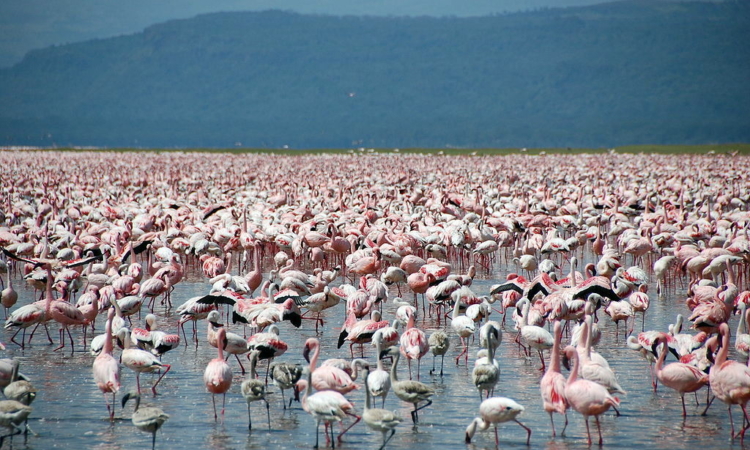
This valley is important for many reasons. First, it is one of the most active geological areas in the world. Second, it is home to many lakes, such as Lake Nakuru, Lake Naivasha, and Lake Bogoria, which support wildlife and bird-life.
Third, the valley has been important in the study of human history. Some of the oldest human fossils have been found in this region, making it a key area for learning about early human life.
The East African Rift Valley is not only a place of science and history, but also a beautiful area to visit. It attracts many visitors who want to see the unique landscape, wildlife, and cultural heritage of East Africa.